

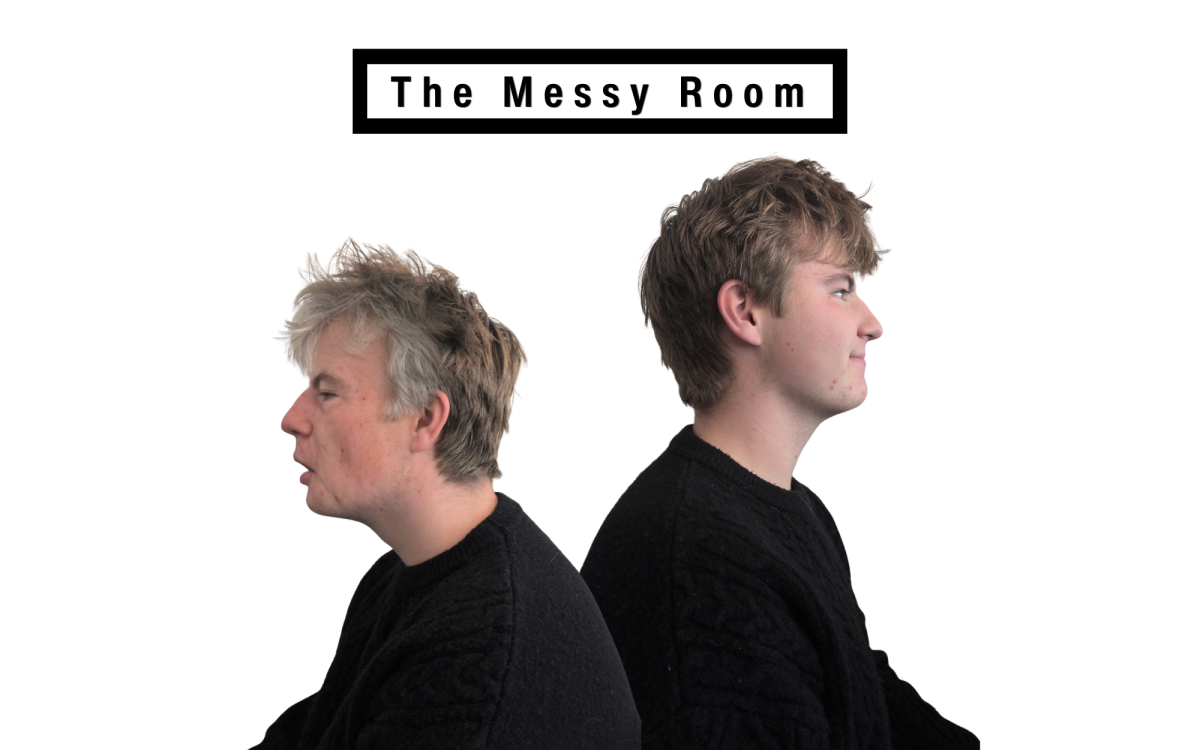
My room is very messy. It’s stuffed to the brim with old books, stuffed animals, trinkets, and an odd paper or two. But it’s unapologetically my room, and for that, I’ll defend it. I sit now in my closet; a closet, because my room doesn’t have a door, so I ended up shoving my computer and a desk in here in order to spare my parents the annoyance of me screaming at my friends on this cyber monolith.
Now I am a senior, and while I’m not on this device tearing demons apart and robbing virtual banks as much as I used to, my room is still just as unkept as it was four years ago, save for the posters I have up on my wall now. And in the same way, I sit here typing away, but there’s a little less time now to get it all written down. So here is my best attempt at conceptualizing what makes journalism so important to me. Let me share a poem with you.
“When, in disgrace with fortune and men’s eyes,
I all alone beweep my outcast state,
And trouble deaf heaven with my bootless cries,
And look upon myself and curse my fate,
Wishing me like to one more rich in hope,
Featured like him, like him with friends possessed,
Desiring this man’s art and that man’s scope,
With what I most enjoy contented least;
Yet in these thoughts myself almost despising,
Haply I think on thee, and then my state,
(Like to the lark at break of day arising
From sullen earth) sings hymns at heaven’s gate;
For thy sweet love remembered such wealth brings
That then I scorn to change my state with kings.”
– “Sonnet 29” William Shakespeare
I love that. I remember hearing that at first and not truly grasping what Shakespeare’s bald Elizabethan brain was getting at, but then thinking back to my younger years. When I was a kid, I talked endlessly about anything from the moment I could talk. My mom worried tirelessly about making sure I could read and write, and spent the next 18 years wondering how to get me to stop. This babbling led me to be much like my room; unapologetic, messy, and stubborn, and when I grew older, the awareness of my messiness led me away from my own sense of self. It took me years to acknowledge that I couldn’t be happy pretending to be something I wasn’t, and I’m better for having to go through that now. But this poem connected to that for me. It speaks of a love so powerful that it overwhelms this desire to be better than what you already are. It’s loving who you are with that person more than the best version of yourself without them, it’s utter devotion. But there are people out there, people who are reading my very words right now, who couldn’t care less about this fluffy poem–and that’s okay.
I remember when I first saw Vincent Van Gogh’s “Starry Night.” A gorgeous painting, but I remember it more specifically for its significance in Doctor Who, a British show my parents introduced to me when I was little. In the show, time travellers meet with Vincent Van Gogh, and talk with the tortured artist.
37 years old. That was the age Vincent Van Gogh reached before commiting suicide. A brilliant artist who wasn’t appreciated while still alive. One of the best parts of Doctor Who is integrating historical figures into the storylines, allowing the audience to see them as the human beings they were. And for the rest of my life, these paintings will mean just a little more as they remind me of the time I spent watching these episodes with my family. But for many, these paintings might just be paintings, Van Gogh might just be some crazy old ginger dude, and that’s okay.
I love music, in all its sprawling complexity. I love the emotional and professional aspects of classical, from its ugly dissonant Perderecki’s and Schoenberg’s, to its sweet and reflective Brahm’s and Bach’s. I love the role that Rap plays in pushing boundaries, constantly revolving into new spaces and meshing with other genres. I love the thousands of lanes of electronic music, from the headbanging dubstep festivals to the boiler room jungle sets. But there are people who stick to their Taylor Swift, and people that stick to their own sonic spaces, and that’s okay.
Sometimes Journalism means looking at the inhumane until it becomes human. A headline is easy. A person is difficult, it always will be. It’s easy to laugh at the old man yelling on the street corner until you learn what war he fought in, or who stopped calling him, or what his apartment smelled like after his wife died. It’s easy to flatten people into categories, politics, usernames, generations, statistics. The internet is at our feet begging us to take the easy route. But the moments that have stuck with me throughout this journey were always things that were distant at first, and then became painfully human.
That’s why I became obsessed with stories. Not because stories make people better, because they don’t always. Not because stories save the world, because they often fail to. But because stories force us to sit still long enough to recognize each other. It’s that split second you realize you’re relating to the person you despise, empathizing with someone who represents everything you have spent your entire life fighting against, because the fight for understanding will always be more valuable than the fight against each other.
Because Journalism to me has never been about being yourself, or even acting as a mirror to reflect life back to its people (that’s called art). Not everyone cares about Sonnet 29, or the brushstrokes of Starry Night, or the churning tempo of a jungle set, but Journalism allows for the possibility to bridge that gap. It’s a tool that can translate something miniscule into something seriously impactful. It’s about becoming the person you don’t agree with, about embodying the differences this vast world has. It’s about embracing that part of you that leaves your room messy, that talks too much sometimes, that stays up late doing homework. Because the minute something different becomes scary, change isn’t possible.