

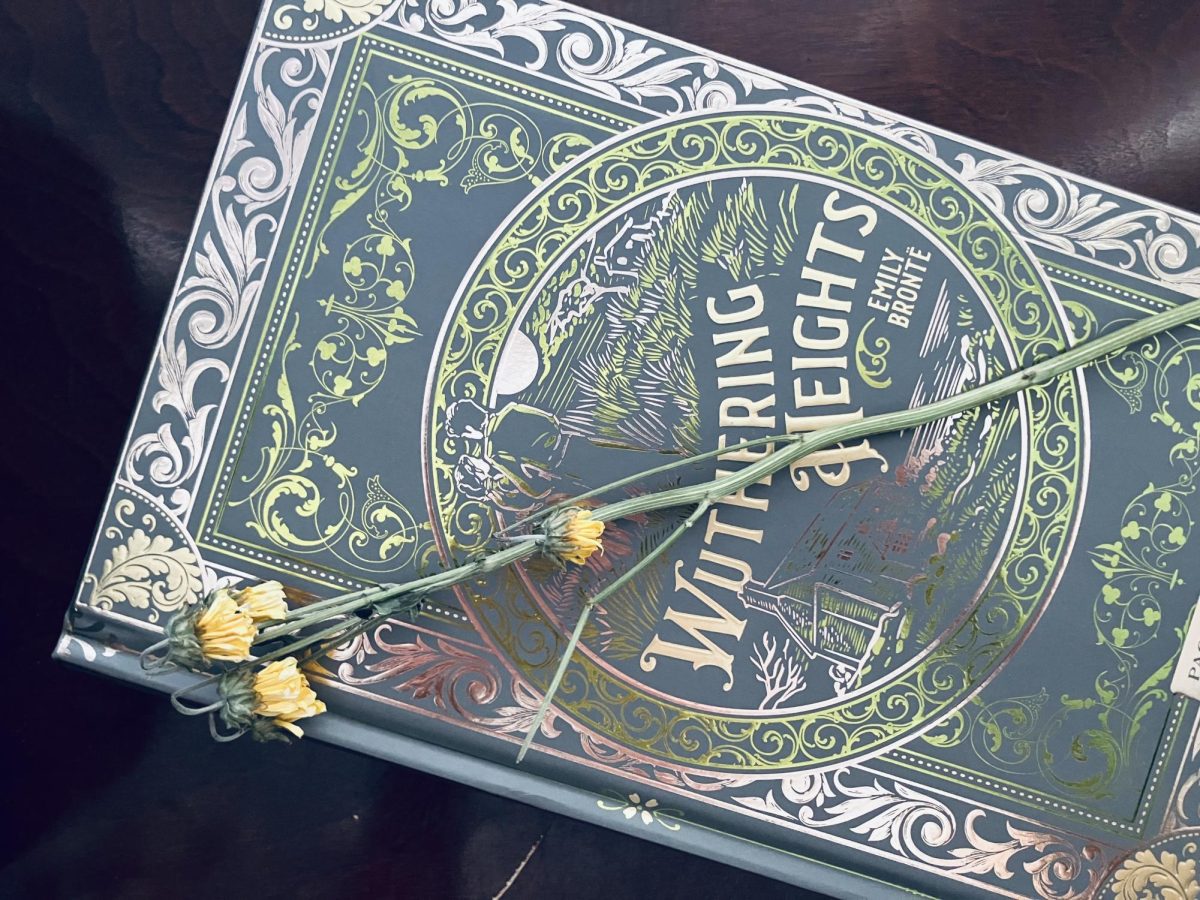
Emily Bronte’s 1847 novel “Wuthering Heights” was a wild ride, to say the least. And I enjoyed every single minute of it. Everything, from the writing style to the characters, is beautifully crafted, providing the flawless atmosphere of a gothic classic.
The Characters
In a story of obsession and grief, the characters do a lot of the work to provide the reader with that fascination and drive to keep reading. However, I’m not going to deny that most of these characters are, well, nasty. But, in a story like this, we need such ‘nastiness’ to display as a response to the trauma that the characters faced before they were shaped into who they are by the end of the book.
A great example of this is Heathcliff; a man known for not only his cruelty, but his passion. Over the course of the story, he is shown to be vengeful, evil and possessive. Yet his childhood shows nothing but the pain leading up to that personality.
The same goes for his other half, Catherine Earnshaw. There is much more to Cathy than her petty and selfish nature. Despite longing for Heathcliff, she betrays her heart in interest of wealth and attention.
Even they hardly compare to Catherine’s wretched brother, Hindley. Out of all the characters in this book, he was the one who I wanted to punch in the face the most. He is unpleasant not only for the characters, but the reader as well. And it says a lot about the writing if you can hate a fictional character that much.
The Lintons might as well be the complete opposite. Edgar Linton is caring and gentle at heart, trapped in a one-sided marriage with our not-so-lovely Cathy. Despite being fearful and wary of her, he absolutely adores her, staying by her side until the very end. However, even he is nothing short of imperfect. Him and Heathcliff practically go head-to-head at every chance they get.
Isabella Linton is kind like her brother Edgar, lively with a heart of gold. However, the reader can’t help but pity her as she refuses to listen to both her sister-in-law and Nelly, both of which are not strangers to Heathcliff’s true nature.
In addition to the characters, the narrators of the novel are also crucial to move the story along.
Both Mr. Lockwood, who learns the history of Wuthering Heights from the housekeeper Ellen “Nelly” Dean, along with the housekeeper herself are considered relatively unreliable. Compared to everyone around them, you rarely get to experience the narrators’ true colors. Though you get to know Nelly’s personal life better than the rest of the main characters, you still never get to witness who she is underneath the loyalty to the Earnshaw bloodline which she claims.
But the children of the original cast are by far some of the most impactful.
Catherine “Cathy” Linton, the daughter of Edgar Linton and Catherine Earnshaw, turns over a new leaf as she manages to become the best of her parents. She adopts her father’s kind heart along with her mother’s passion while avoiding Mrs. Linton’s cruelty and selfishness. While far from perfect, the book ends with her breaking the chain of tragedy.
Her cousins are even more fascinating than she is.
The confusingly named Linton Heathcliff (the son of Isabella Linton and Heathcliff) was possibly one of the most sympathetic of the main cast. Though he can be whiny and annoying, all of it is done out of suffering.
Unlike many of the other characters, Linton never stood a chance. After his mother’s death, he essentially had a death sentence written out for him, both by his own illness and his father’s cruel nature. Perhaps that anger is reflected onto him, leading him to take out his father’s abuse on those around him.
Hareton Earnshaw, the son of Hindley, might as well be the polar opposite of Linton. Despite being forced into a cold and tragic environment, he manages to remain kind and courteous. That’s not to say he doesn’t have his moments, of course. Let’s just say that his cousin in-law would find this out the hard way.
But the characters aren’t all that make this book exceptional. For without the themes and plot, they might as well be sketches on an otherwise empty canvas.
Plot, Theme & Symbolism
“Wuthering Heights” is a very mysterious and alluring novel. There is not a single detail in the book that isn’t thought out.
Trauma is a key theme that lingers throughout the storyline. Every character, their flaws and their goodness is a product of the world around them. Heathcliff is the best example of this, as the world he was forced into has left him a cruel, seething cauldron of vengeance and anger by the end of the book. The years of abuse and torment that he experienced would eventually become almost nothing compared to what he would inflict on those around him.
That brings us to our next theme: obsession. After Catherine’s marriage into the Linton family, Heathcliff becomes cruel and vengeful towards his former home and anyone associated with it. Imagine being so crazy about your ex that you destroy her coffin so that you can hopefully fit in it someday. Yikes…
Catherine isn’t much better in this sense. She is cruel towards both Edgar and Heathcliff, with her and Heathcliff accusing each other dotingly one last time before she initially perishes. When Little Cathy becomes acquainted with that family years later, Heathcliff makes it his mission to destroy her too, just as he believes her parents destroyed him.
Death and illness is another theme that is just as present in this book as in any other of its time. Yet it means something more here.
It can be assumed that Catherine’s bouts of mental and physical illness serve as a sort of metaphor for her connection with Heathcliff, and her dying after losing him once again indicating that she is so in love with him that she literally cannot live without. As her health declines prior to her death, Cathy slowly becomes more unstable as she feels drawn to her former home as well as her former lover.
Linton Heathcliff’s sickness makes him incredibly vulnerable, with his failing health putting a massive damper on Cathy and her mindset. His suffering is enough to push him past his limits, as the reader witnesses him evolve from a sweet, sensitive young boy to a spiteful, bratty mess of a human being.
The novel is also loaded with symbolism, from the subtext to the title. The word “wuthering” is related to chaotic, howling winds. Sounds familiar, doesn’t it? The moors aren’t the only thing that appear untamed and angry throughout the book. The entire novel has a distinctive dreary yet ferocious atmosphere. For beneath the surface of melancholy lies chaos.
This also plays as a major parallel between Wuthering Heights and Thrushcross Grange, the home of the Lintons. The portions of the story set on the grounds of Thrushcross Grange have a very candid light, elegant air to them. In other words, the complete opposite of the novel’s other main setting.
You almost have to think of the houses as characters in their own right. The buildings show so much contrast and personality despite serving as backdrops for the storyline.
The dogs in the novel also provide some less obvious symbolism. The dogs appear to represent the untamed, thoughtless urge to attack as a form of defense. When walls of razor-sharp teeth are built up around someone, it is nearly impossible for anyone to get in. The dogs may serve as a metaphor for the way Heathcliff isolates himself and uses his pain as a fuel to destroy those farthest and closest to him.
The Fine Line Between a Love Story and a Gothic Tragedy
The novel is often marketed as “the greatest love story of all time.” Anyone who reads the book will quickly realize that this couldn’t be farther from the truth. The story actually falls more in line with the tropes of a gothic tragedy, with many characters being dead or traumatized by the end.
In Gothic literature, the art of emotions, like anger, are often a key point.
The book is definitely more centered around resentment than devotion. Or rather, resentment to the point of devotion. Yes, Catherine and Heathcliff care deeply for one another. But her words “I am Heathcliff” mean so much more than that. Their relationship would nowadays be considered a variation of the “star-crossed lovers” trope, where two soulmates will always be forced apart somehow.
Catherine says this because she knows deep down that Heathcliff is the only person who ever has and will understand her. They’re bound by trauma and personality, yet they are unable to truly make peace with their lives as they constantly feel drawn to what can never be.
Everything, from this trope to the way Catherine and Heathcliff treat each other is more than enough proof to say that this is anything but an innocent, fluffy romance book. Isn’t it so strange how two people can be so in love, yet they can only cause one another grief?
Why do Adaptations Never Get it Right?
There are some books that are just far too complex for the screen, and this is definitely one of them. You could do your absolute best to try and adapt a novel like this and it could still fail to capture the true meaning and feelings behind the book.
This novel also has a history of being whitewashed, specifically with Heathcliff’s character. A talented actor means nothing if you’re wiping history and culture away.
Final Thoughts
If you’re a fan of Gothic literature, then you should definitely give this a read. And if you plan on watching any of the movies, it would probably be wise to watch before reading the book.
The novel is a beautifully grotesque combination of obsession, grief, wild characters and a powerful atmosphere. Overall, it’s a 10/10 read and a must for anyone allured by so much as the title.