

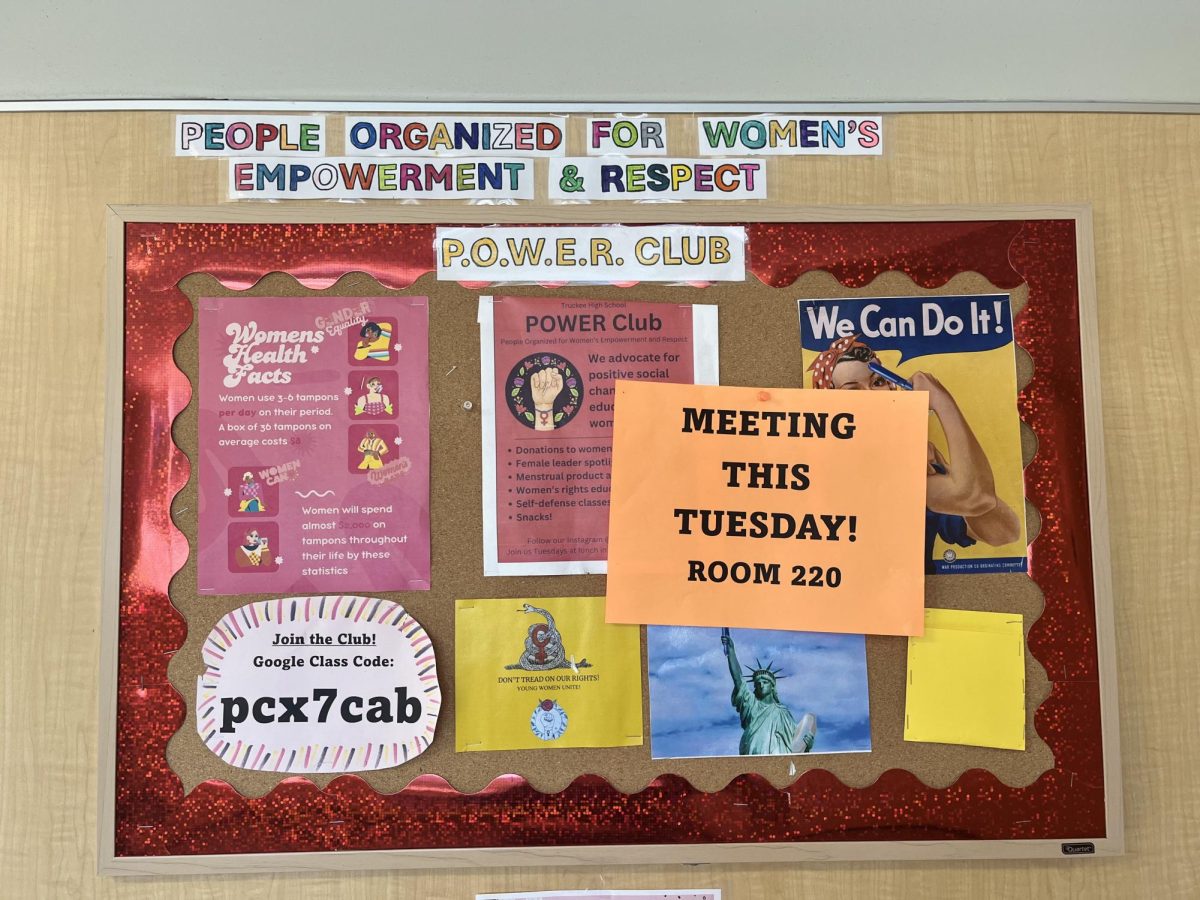
For decades, feminism has been defined as the belief in political, economic, and social equality of the sexes. A word associated with political movements, historical figures and waves of social change that have rocked through time since the 19th century.
At Truckee High School today, however, feminism means different things to different students– shaped through personal experiences, social media and conversations inside and outside the classroom.
For some students, feminism is a straightforward concept aimed at inclusion, respect and responsibility.
“Feminism, to me, is respect and full gender equality,” said Dani Mason, a senior at Truckee High School and member of the People Organized for Women Equality and Respect (P.O.W.E.R) club.
Most students point to issues they feel are still relevant today, including the gender pay gap, stereotypes, and expectations placed on young girls through social media or society in general.
Not all students define feminism in the same way. While some view it as an ideology advocating for women’s equality, others focus on the stigma the word can carry at Truckee High. Yet, for many students feminism remains an ongoing conversation seeking change and reflection within the school community. For younger students, feminism is most often understood through everyday experiences as well.
“Personally, feminism to me means standing up for women’s basic rights,” said Reese Killen, a freshman at Truckee High and P.O.W.E.R club member. “I think issues that are often overlooked at school are things like body shaming, body dysmorphia and the general ideas of what a woman should look like.”
Social media also plays a huge role in shaping how feminism is discussed and perceived among teenagers in 2026. While some online platforms help spread awareness about gender inequalities, others can contribute to misunderstandings about feminism or increase the stigma around the word.
“I feel like social media algorithms can influence unrealistic and unhealthy body image types, especially for younger girls,” said Sierra Rogers, a sophomore at Truckee High.
Students involved in the P.O.W.E.R club say these misconceptions can discourage others from engaging in conversations about gender equality and women’s rights, even if they agree with the movement’s core ideas.
“I think some kids at our school think the P.O.W.E.R club is just ‘women hating men’, which it’s not,” Mason said. “We do a lot of fun stuff and I think we need to keep talking about these issues of gender equality, because it’s never going to be equal unless we don’t stop talking about it.”
Despite differing perspectives gained through experiences and interpretations of the word, many students agreed that discussions around feminist topics concerning women’s equality are still relevant in school environments today.
“I think gender equality is a really important thing to educate kids about because it feels like we’re moving backwards as a society, about what we think a woman should be and how much she should achieve, sexism has become more evident recently. I also think it is really important to learn from past mistakes to educate the next generation,” said Killen.
From the expectations placed on girls at a young age to the conversations about representation and opportunities in the classroom, students say issues around gender inequality continue to affect their daily lives.
As students at Truckee High continue to navigate what feminism means to them both as a word and a concept in their realities and futures, one theme stands out: the desire for equality, understanding and open dialogue about the issues that women continue to face in 2026 globally and locally, here in the Tahoe Truckee region.