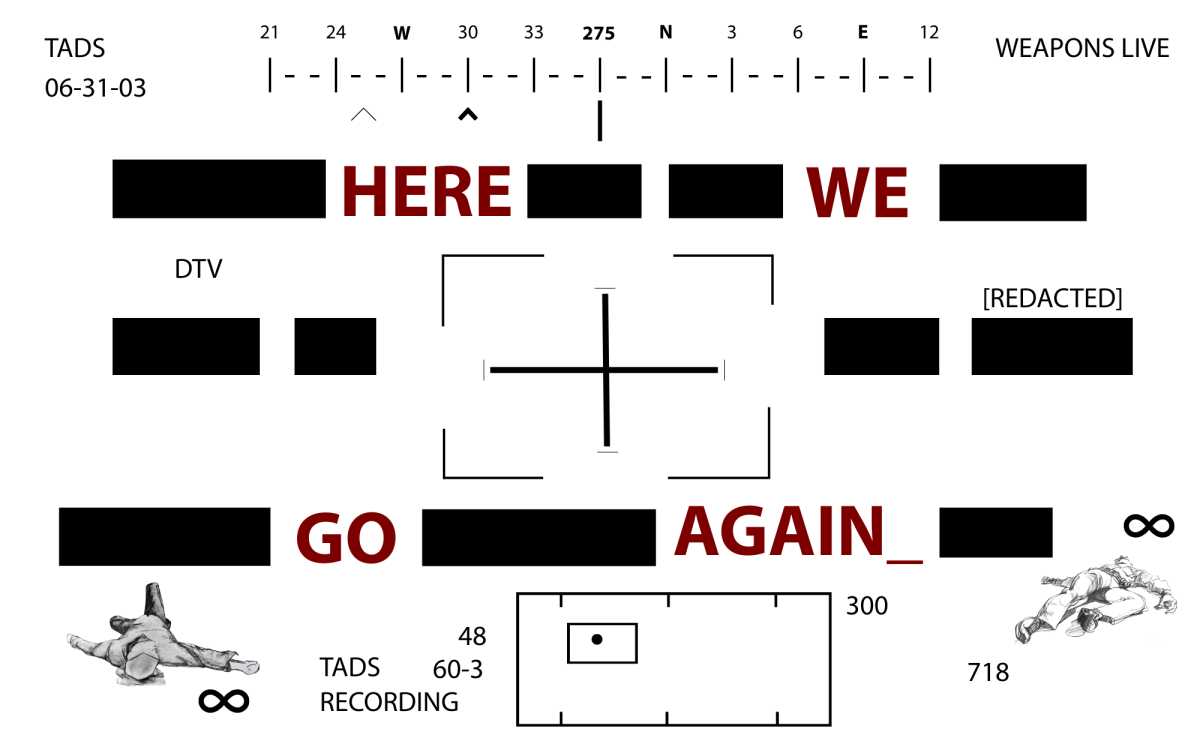
2007. An Apache helicopter crew in Baghdad opens fire on a group of people and a responding van. The gun-camera footage, secretly recorded and later released by Wikileaks in 2010 as Collateral Murder, shows the strikes, resulting in the deaths of at least 12 people (Including two Reuters journalists), and the crew’s chilling radio commentary. Two innocent children were wounded in the attack. Within days of its release, it reached every major international outlet and became one of the most discussed war-related leaks of the 2000s.
So why didn’t we see this sooner? Military and intelligence organizations routinely classify battlefield footage, after-action reports, and internal policy materials. Classification creates the means to hide things from the public, even if it would be within the public interest. Leaders were incentivized to downplay or not fully document things that reflect poorly on policy or expose legal risks. Independent monitoring is rare, especially in a war as unpredictable as Iraq. In Iraq, it’s not like you’re on team blue fighting team red. The enemy could be standing right in front of you, and there would be no way of knowing. It’s common for civilian casualty reports to later be revised to add previously unreported incidents. Other cases similar to the WikiLeaks video, such as the 2021 Kabul strike, show incidents formally ruled as “legal” or “honest mistakes” despite public outrage.
“Hiding” takes many forms. It’s not always this outright big-brother style suppression, but it is demonstrated through things like under-counting, delayed reporting, classification of investigative files, or framing actions as lawful mistakes.
Some point to the Rules of Engagement (ROE) to blame for the attack. The first facet of this was Positive Identification. Before engaging, forces were required to have “reasonable certainty” that the target was a legitimate military target. If not, troops were supposed to seek higher authority. The ROE also allowed lethal force in response to hostile acts or “hostile intent,” which could be interpreted broadly in fast-moving situations. That same doctrine emphasizes minimizing collateral damage and avoiding civilian-populated centers unless justified. The difference between the sweaty, stressful, sometimes smoke-engulfed ground soldiers’ vantage point and the pilot’s often led to tragic misidentification. There are countless examples of these miscommunications publicly available, such as the Granai airstrike, which massacred approximately 86 to 147 Afghan civilians, of which 93 were children.
One of the most vocal and straightforward accounts about what happened in Baghdad was Ethan McCord, who can be seen carrying a young boy to safety in the video. McCord discussed his experience in the battle in an interview with the World Socialist Web Site. “What happened then was not an isolated incident. Stuff like that happens on a daily basis in Iraq.” McCord also recalled being ordered to “kill every motherf****** on the street” if an IED hit their convoy. Looking back on his younger, more naive demeanor, McCord said, “I didn’t understand why people were throwing rocks at us, why I was being shot at and why we’re being blown up, when I have it in my head that I was here to help these people. The first real serious doubt, where I could no longer justify to myself being in Iraq or serving in the Army, was on that day in July 2007.” In this interview, McCord reports that repercussions for seeking mental health help could include being labeled as a “malingerer,” a crime under U.S. military law. McCord requested mental health assistance following what happened, but was told by his superior officers to “get the sand out of [his] vagina” and to “suck it up and be a soldier”
2026, The United States carries out a major military operation in Venezuela (reported codename “Operation Absolute Resolve” in news coverage), involving airstrikes and a seizure in Caracas that resulted in President Nicolás Maduro and his wife being taken into U.S. custody and flown to New York. Trump says more than 80 were killed, and there has been widespread condemnation and UN debate. This operation has been framed as a law enforcement and narco-terrorism action, considering Maduro was indicted in U.S. courts on narcotics charges.
This immediately rang my bell. Possible illegal regime change? Legal rationales that are vague and not actual declarations of war? Crucial details classified/disputed/yet-to-be-released? A large backdrop of natural resources and geopolitics, considering Venezuela is the largest oil reserve on earth? This conflict has huge potential to be Generation Z’s forever war, our parents’ post 9/11 memories doomed to repeat themselves. That’s why many are thinking “Here we go again…”
But that’s not to say there aren’t key differences. Iraq was a full scale invasion followed by a multi-year occupation with huge nation building goals in mind. The Venezuela action was high-impact yet short and sweet with no visible long-term commitments so far. The Iraq invasion followed political and military mobilization and a big green light from Congress, whereas the Venezuela action was presented as a counter-narcotics mission and executed across the border, raising questions over whether America is allowed to stick its fingers into that jar legally. The difference in casualties is also clear as day, but it’s not over with Venezuela just yet.
These two conflicts raise very different questions, but they also have so much in common. We’re in an age now in politics where the black box is feared, redactions and classifications aren’t as clear-cut an excuse anymore. When the crew on the Apache in 2007 learned a child had been injured by their attack, one initially responded, “Ah damn. Oh well”, and a minute later continued, “Well, it’s their fault for bringing kids into a battle” If a war is so casual with shrugging at children’s suffering, it means secrecy can be just as dangerous as a mounted machine gun. It means the truth is the one thing keeping what happened this January away from a full-blown invasion.