

Horror is a movie standard that not a lot of directors look towards, but it is one of the most creative genres in the industry. It prods at our primal feelings of fear, disgust, and dread, letting its directors shape emotional journeys with a more personal approach. Monsters and scares can also play as social mirrors, acting as metaphors for real issues like trauma (“Smile”), misogyny (“The Descent”, “The Substance”), or even climate anxiety (“Mother!”). Limited resources have historically pushed horror to new heights, forcing them to invent clever techniques and storytelling shortcuts that feel fresh.
Yet there’s always a conversation to be had about the use of special or practical effects, pacing, or acting. Everyone who has an interest in the subject has an opinion, whether they want to admit it or not, and in many situations this is a good thing. As a category of film, the genre has its heavy hitters such as “It” (2017), but there’s also so many cult classics within a variety of fun subgenre’s like found footage’s “Rec” (2007) and “The Blair Witch Project” (1999), and the occult “Hereditary” (2018) and The Witch (2015) which all cater to everyone’s specific hunger for fear.
But all discussion seems to stop when the mention of “The Shining” happens. And this winter, I would urge you to take a good, long look at that movie as a returning or new viewer.
Stanley Kubrick as a director is famous for being meticulous. Signature marks in his films usually involve not just high budget, but high visual appeal. “2001: A Space Odyssey” is a film that combines groundbreaking scenes with bitter yet stunning sound design. “A Clockwork Orange” is a movie that creates a world flawlessly and immerses you in a soup of ambience and story.
The movie tells a story of the Torrance family moving into the Overlook Hotel, with Jack, the father, being the caretaker of the hotel. The job seems simple: he gets to work on his novel, and his wife and son Danny get to enjoy the peace and quiet over a snowy winter blizzard. As time moves forward, the hotel proves to be more than just a building. The family begins to question its integrity, and its sanity.
“The Shining” is a movie that is much like his other films in the sense that it is a stew: a delectable combination of the bombastic and meticulous. The mere scale of the Overlook hotel mixes with its isolation to create an intense, claustrophobic atmosphere that pushes its focus on the characters. Kubrick’s depiction of the hotel feels almost lovecraftian, the way its gaping maw lays way to a terrifying complexity. The closest feeling I can compare it to is the feeling of walking alone at night, and hearing a second set of shoes slowly making its way towards you.
The movie is a staple Kubrick film, with the Overlook Hotel being this capsule of 1940’s design. The halls are these hulking echoing chambers that have a very commercial cleanliness to them. Outside there is a massive hedge maze that Kubrick actually built in England for the production of the film, its massive bushes standing at eight to ten feet.
Sound is a tool that is utilized to its full potential. Scenes will be drawn out to accentuate the immense lengths it takes to walk from one place to another, the sound of Danny’s roller bike reverberating as the plastic wheels go from wooden ground to soft rug. Silent moments are filled with tension as Jack’s typewriter clicks away. With all the peacefulness this story should be, the constant noise creates an inescapable tension, which makes the finale all the more worthwhile.
The soundtrack is just as masterful. The opening theme is an iconic electric orchestration that ominously trudges forward as a helicopter shot sweeps across the mountains of Montana. There’s more orchestral music, notably from György Ligeti, a composer that Kubrick has worked with before in “2001: A Space Odyssey.” His music is a hovering, static texture that produces an uncomfortable stillness that can make interior spaces feel alien. Ligeti’s compositions squirm and build, creating a more tangible feeling that something is terribly wrong even in moments that would be calm with the absence of his music. Krzysztof Penderecki is another composer that contributed to this focus on texture over melody. Penderecki’s work, “Polymorphia,” clusters together violent sonorities that trigger visceral, primal reactions when heard. Penderecki explored this experimentation with inhuman echoes earlier, finishing an avant-garde concert piece for 52 string instruments. After he was finished, he named it “Threnody for the Victims of Hiroshima,” thinking its screams of sound resembled immense pain and suffering.
Shots of the hotel from its prime years are made to look reminiscent, yet ghostly. Huge ballrooms are overflowing with timely music and the roar of conversation. The uncanny realism of the hotel makes everything feel slightly off, like how most photos of places that should have people should. There is nothing more unusual than something so familiar being altered so drastically, and it does wonders for how the audience pieces together the truth. It’s like Jack Torrance has unearthed something, but it’s also like something more powerful has guided him to this very moment. I highly recommend watching “Room 237”, a documentary on the film that dives deeper into the movie’s plentiful hidden details.
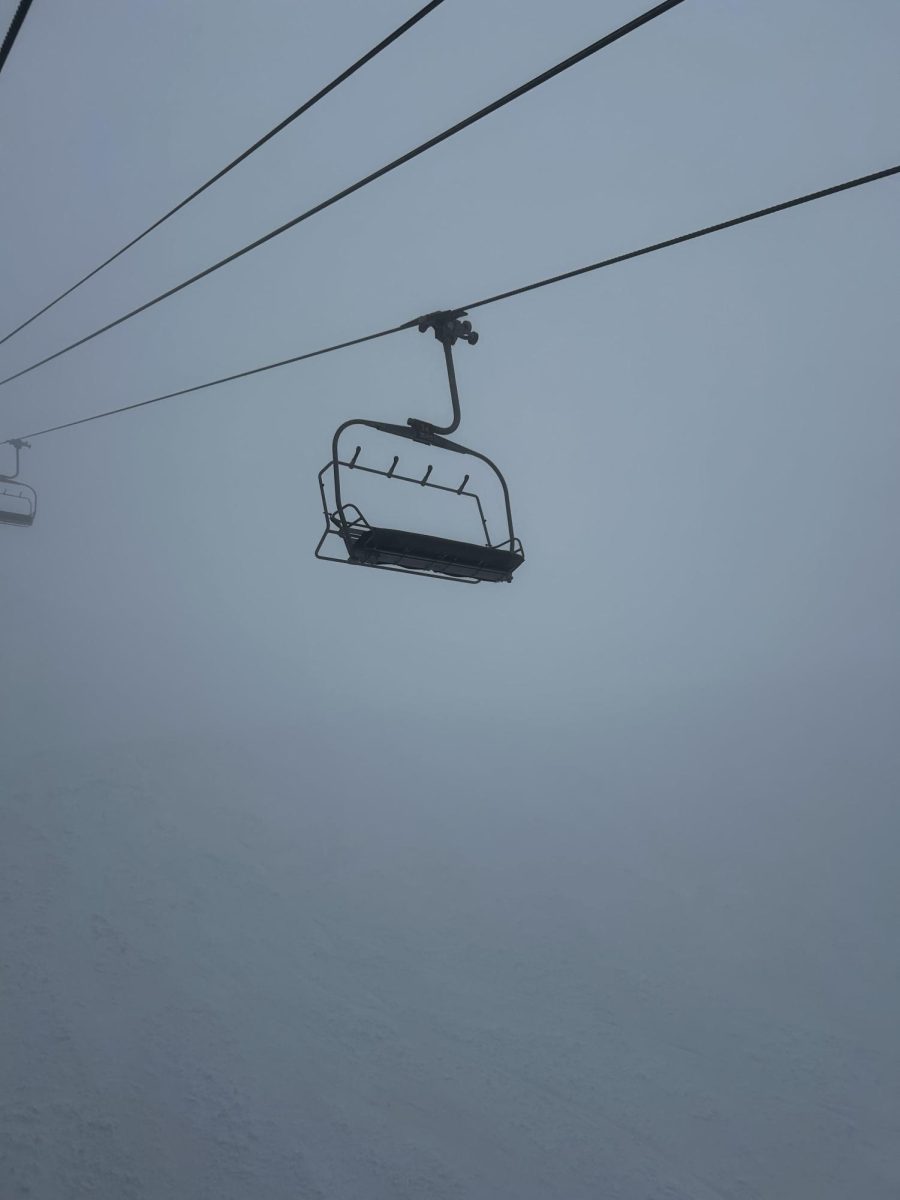
At its core, “The Shining” is a story about isolation, which is unfortunately something we all can relate to when the snow hits. That is why it is the perfect Truckee Horror concoction: living in a house shrouded by pine trees and snow is what makes this place what it is.
So give it a watch. Just make sure you aren’t losing it. You’ve always been a mountain person.
Haven’t you?
Revisiting The Shining
About the Contributor

Ciaran Phillips, Managing Editor
Ciaran is a Senior returning to the staff team for his fourth year of writing and designing. He will also be collaborating with Cali as one of the managing editors. He manages social media, photography, advertising, and the website. He enjoys writing on film, music, and current events. In his free time, he plays tennis, skis, and enjoys playing the double bass. He has broken both wrists.