


In 1960, our community made history. More than 650 athletes, including some of the first women speed skaters to ever compete at the Games, representing 30 countries, took part in the eighth Olympic Winter Games in Squaw Valley USA, now known as Palisades Tahoe.
It was a moment of progress; a mark in history that symbolized a step forward for winter sports and female athletes on the world stage. People in our community made history too—they set records, they broke records, and they represented the USA in their sports of choice.
But what if they hadn’t? What if they were told no? What if the 506 men and 144 women competing had been told ‘NO’?
More than six decades later, it’s difficult to imagine something like that happening now, in a time when women have made significant gains in both athletics and the public sphere. However, today that same question of opportunity remains at the center of one winter sport, Nordic Combined.
For Annika Malacinski, a USA Women’s Nordic Combined skier, it is happening right now, in her sport, at the highest level of competition. Despite the growth of women’s sports and her own success at the international level, she is facing the same barrier women in 1960 helped break: the Olympic door for her event stands closed.
“There is nothing left separating women and men in the Nordic Combined event,” explained Malacinski. “Yet, [the International Olympic Committee (IOC)] are still painting the picture that women are not good enough to be there, which is so far from the truth.”
Malacinski was told in August of 2025 that she would not be able to compete in the 2026 Olympic Games. There would be no women’s division in the Nordic Combined event in
Italy, and she would not be allowed to compete in the men’s division either.
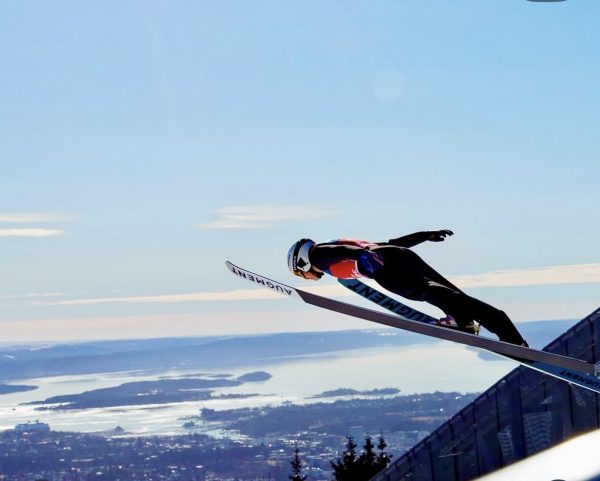
Nordic Combined is the mixed winter sport of cross country skiing and ski jumping. Athletes compete in a first round of ski jumping, the results of which determine their starting place in the 5-kilometer cross country ski race that follows. It is an event that requires extreme mental and physical fitness, and athletes are known for their intense courage, strength, precision, and endurance.
According to Malacinski, the IOC’s justification for not including Women’s Nordic Combined in the 2026 Winter Olympics was related to a lack of interest in viewing the sport, and lack of sponsorships and commercial investment. Additionally, she was told that approximately nine nations had shown interest in sending female athletes to compete in Nordic Combined; however, the IOC was concerned with this limited global participation.
“Unfortunately I have learned that the Olympics are more about politics than they are sports.” she said. “And part of adding Women’s Nordic Combined to the 2030 Olympics would be based on views, if we have low views, then the IOC doesn’t make money or profit off of us.”
The exclusion of Women’s Nordic Combined from the Olympics stands in stark contrast to the IOC’s stated goal of gender equality. Ongoing advocacy remains a struggle for athletes, coaches and advocates alike.
So, for Malacinski, her chance to make history must wait.
Before the politics and Olympic debate, Malacinski was a young girl growing up in Steamboat Springs, Colorado, learning to ski. Malacinski started off competing as a gymnast for most of her childhood, and watching her brother compete in Nordic Combined events. Her mom was Finnish, so Nordic skiing was treasured on that side of the family, and her dad was a ski instructor at the local resort.
“Skiing in our family was big,” she said. “And as a kid, the Olympics are amazing. You’re not only seeing the athletes compete, but you’re seeing their inspiring stories too.”
In her sophomore year of high school, after leaving gymnastics, Malacinski drew up the courage to try her first ski jump with her brother at her side.
“It was crazy, who wants to try ski jumping at age 16?” she said. “But, I just decided to go for it and the adrenaline rush was incredible.”
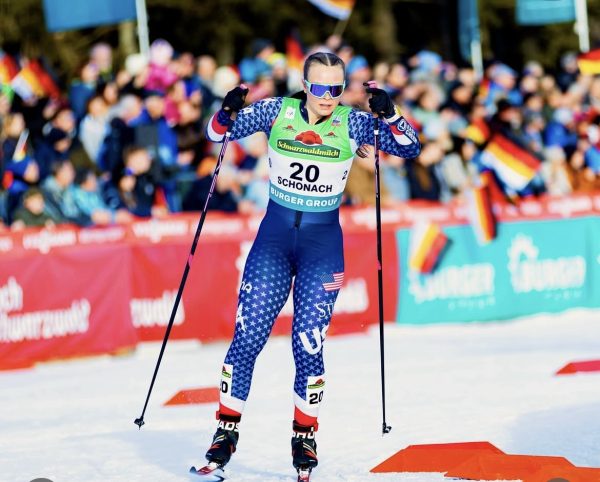
After that first jump, the spark was ignited. She began training in both ski jumping and cross-country skiing, finding a new direction after leaving gymnastics. As Malacinski went further into the world of Nordic Combined, the goal of competing in the Olympic Games started to take shape.
A goal that for now must wait until the 2030 games or beyond.
Even though Malacinski doesn’t agree with the IOC’s decision to exclude Women’s Nordic Combined in the 2026 Games, she still believes future games will be a focal point for the sport.
“We have everything but the Olympics,” she added.
Malacinski’s story was recently highlighted in a short documentary by Glimpse Films in the 2025 Mountain Film Festival in Telluride, Colorado. The film was then added to the selection of films available for the Mountainfilm On Tour. The tour ironically made a local stop at the historic Olympic Village Lodge in November at Palisades Tahoe, with over 300 attendees. The night of films was hosted by Alpenglow Sports, whose staff specifically chose Malacinski’s story as one of their films due to its impactfulness.
“A standout to me, at every event Alpenglow hosts, are the kids in the room, of all ages. They are showing up, and because of this, it is not only a huge honor but also a responsibility to share a story like Annika’s.” says Molly Maquire, a member of the Alpenglow educators. “When stories like hers are passed on, it moves the dial for the next generation of women coming up in a sport like Nordic Combined. It inspires the females in the room and raises awareness for all that, as far as we’ve come toward equality in sports, we still have to keep fighting. In short, visibility leads to representation, inclusion, and access for all.”
The ethos of Mountainfilm On Tour is to share the most inspiring and impactful films with communities around the west. The reason for which Malacinski agreed to share her story on camera.
“I feel like I’m one of the only women pushing for this [equality in Women’s Nordic Combined] and that can be lonely and really hard sometimes, but I wouldn’t change it for the world, because I want to spread this story.” she said.
Malacinski wants everyone to know about the recent IOC’s decision and the inequalities in women’s Winter Olympic sports.
“Spread the word, tell your friends and talk about this,” she says. “I encourage everyone to write a letter to the IOC. I want people to see this issue and see what needs to be fixed.”
Malacinski’s film—“Where She Lands”—can be viewed on the USA Nordic Combined website, or learned more about at Mountainfilm on Tour.
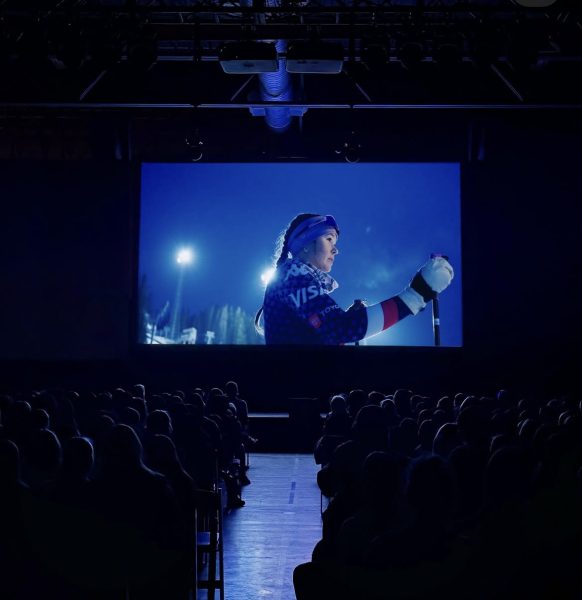
“This film is one of the biggest things that has helped me push out my story and I am so grateful for the team and the work they did.” says Malacinski.
While Malacinski’s fight for Women’s Nordic Combined continues, she wants young athletes and young women to know they are not alone in their struggle for equality and representation.
“I want other girls to know that they can do anything. Nothing can stop them,” she says. “One of my biggest dreams is to not only compete in the 2030 Olympics, but become someone who doesn’t take ‘NO’ as an answer.”